Plastic surgery—a specialty that uniquely blends medical science with aesthetic artistry—demands supreme precision and masterful management of patient expectations. Success hinges not only on surgical skill but also on the ability to foresee outcomes, manage complex tissue transfers, and minimize complications in high-stakes procedures like breast reconstruction or facial trauma repair.
Plastic and reconstructive surgeons face core challenges:
Managing Subjectivity:
Bridging the gap between a patient's aesthetic vision and a realistic, achievable surgical outcome.
Minimizing Risk in Reconstruction:
Ensuring the viability of tissue flaps and predicting complication risks in microvascular surgery.
Complexity of Planning:
Integrating multimodal imaging (CT, MRI, 3D scans) for complex procedures.
Artificial Intelligence (AI) is emerging as the essential technology to address these challenges, moving plastic surgery toward a future of hyper-personalized precision. AI uses computer vision, deep learning, and predictive analytics to enhance every phase of the patient journey—from consultation to recovery.
Atlas Meditech’s AtlasGPT provides this intelligent augmentation. As a clinically validated, guideline-anchored system, AtlasGPT delivers real-time, evidence-based decision support across all 35 medical specialties, empowering plastic surgeons with tools for superior planning and predictable results.
How AI Elevates Precision and Safety in Plastic Surgery
AI technology is integrated into the plastic surgery workflow to achieve unprecedented levels of accuracy, personalization, and safety across both aesthetic and reconstructive domains.
1. Precision Aesthetics and Patient Expectation Management
For aesthetic procedures, AI introduces objectivity to the subjective process of planning, drastically improving patient satisfaction.
3D Outcome Simulation and Visualization: AI-driven software analyzes a patient's facial or body structure (e.g., bone structure, skin elasticity) from 2D images or 3D scans. Using deep learning models trained on thousands of surgical results, the AI generates a highly realistic virtual simulation of the potential post-operative outcome. This virtual preview, often used in procedures like rhinoplasty or breast augmentation, is vital for:
Aligning Expectations: Visually confirming the planned changes with the patient, bridging the communication gap, and managing anxieties.
Customized Planning: Allowing the surgeon to make minute, data-informed adjustments to the surgical plan in real-time, based on the patient's unique anatomy and desires.
Facial and Body Analysis: AI algorithms can objectively measure facial symmetry, identify subtle asymmetries, and even predict how the patient’s features will age, guiding the long-term strategic placement of injectables or the planning of facelifts.
2. Augmenting Reconstructive Safety and Flap Viability
In complex reconstructive surgery, where tissue viability is life-critical, AI functions as a crucial risk mitigation tool.
Predictive Risk Assessment: Machine learning models analyze comprehensive patient data (comorbidities, lab results, surgical history) to predict the individual risk of specific complications, such as flap necrosis, infection, or implant failure in breast reconstruction. This allows surgeons to modify techniques or initiate preventive measures pre-emptively, a capability highlighted in studies on AI in Reconstructive Surgery Risk Stratification.
Microvascular Planning and Monitoring: In free flap surgery, AI-powered computer vision is used for:
Preoperative Mapping: Automating the precise mapping of perforator vessels from CT angiography, optimizing the flap harvest site.
Postoperative Monitoring: Continuous monitoring of the transferred tissue using integrated sensors or image analysis (e.g., via a smartphone camera). AI detects subtle color, temperature, or perfusion changes indicative of vascular compromise far earlier than human visual inspection, drastically improving flap salvage rates, a key application in AI in Flap Viability Analysis.
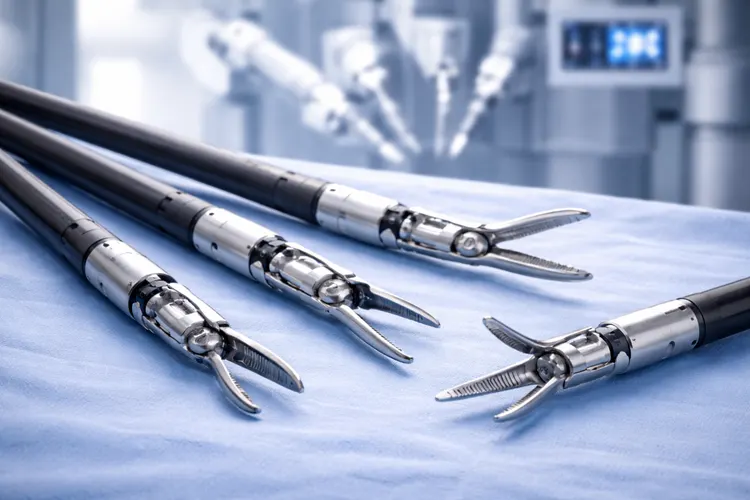
Robotic-Assisted Microsurgery: AI-enhanced robotic systems, particularly in microsurgery and hair transplantation (like the ARTAS system), provide surgeons with sub-millimeter accuracy and enhanced visualization, reducing human error in repetitive or extremely delicate tasks.
3. Streamlining the Clinic Workflow
AI helps plastic surgery practices operate more efficiently and professionally.
AI Scribes and Documentation: Generative AI solutions capture consultation dialogue—including the complex technical details of surgical plans and aesthetic goals—and instantly convert it into structured clinical notes, operative reports, and patient consent forms. This dramatically reduces the administrative load, freeing surgeons to spend more time on high-value patient interaction.
Patient Education and Communication: AI-powered chatbots and educational tools provide instant, personalized information to patients regarding pre- and post-operative instructions, enhancing compliance and satisfaction.
The AtlasGPT Advantage: Precision Anchored in Evidence
AtlasGPT is a purpose-built advisor that supports the dual nature of plastic surgery—both the artistry and the technical execution.
Guideline-Anchored Planning: While generic AI can simulate images, AtlasGPT ensures that all surgical recommendations are backed by transparent, peer-reviewed clinical data and the latest surgical guidelines, providing the scientific foundation for the aesthetic art.
Seamless Data Integration: It integrates with imaging systems (PACS), 3D modeling software, and EHRs, making it a central decision-support hub that coordinates complex patient information for procedures from liposuction to complex burn surgery.
The future of plastic surgery is an alliance between human artistry and technological precision. By adopting AtlasGPT, surgeons can achieve results that are not just aesthetically pleasing, but scientifically predictable, safe, and tailored perfectly to the individual.
FAQs About Plastic Surgery AI Tools
What is the primary role of AI in Plastic Surgery? AI primarily enhances preoperative planning through 3D simulation, predicts surgical outcomes and complication risks, and improves safety in reconstructive procedures (like flap monitoring).
Can AI replace a plastic surgeon's judgment? No—AI serves as a powerful co-pilot and advisor. It provides data and simulations, but the final aesthetic judgment, surgical skill, and ethical responsibility remain solely with the qualified plastic surgeon.
How does AI manage patient expectations? AI-driven 3D simulation software allows patients to visualize realistic potential outcomes before surgery, aligning their expectations with what the procedure can safely and effectively deliver.
Is AtlasGPT useful for both aesthetic and reconstructive cases? Yes—AtlasGPT provides support across the full spectrum of the specialty, from optimizing facial analysis for aesthetics to predicting flap survival in microvascular reconstruction.
How does AI make flap surgery safer? AI continuously analyzes sensor or image data post-operatively to detect subtle signs of poor blood flow (vascular compromise) in transferred tissue far earlier than traditional methods, enabling immediate intervention and improving salvage rates.
Elevate Your Practice with AtlasGPT
AI is the defining factor for achieving the highest levels of precision and patient satisfaction in modern plastic surgery. AtlasGPT equips plastic surgeons with the predictive analytics and planning tools necessary to minimize risk, manage expectations, and redefine procedural excellence.
Experience AtlasGPT in Plastic Surgery today to see how intelligent augmentation can transform your practice.