Thoracic surgery encompasses complex procedures within the chest cavity, often involving the lungs, esophagus, mediastinum, and chest wall. The greatest challenge in this field is the early, precise treatment of lung cancer—the leading cause of cancer death worldwide.
The integration of AI in Thoracic Surgery is a revolutionary step, offering the computational power needed to diagnose earlier, plan more meticulously, and operate with greater precision than ever before.
Atlas Meditech’s AtlasGPT brings these intelligent systems into the multidisciplinary thoracic team, providing crucial support across the entire surgical continuum.
The Transformative Role of AI in Thoracic Patient Care
AI is rapidly evolving from a research tool to an indispensable clinical partner, enhancing accuracy and improving patient outcomes in three key areas:
1. Early Lung Cancer Detection and Nodule Characterization
Lung cancer screening via low-dose CT (LDCT) generates an enormous volume of images. AI’s ability to analyze these scans with speed and consistency is a game-changer for early diagnosis.
Nodule Detection and Triage: Computer-Aided Detection (CAD) systems powered by deep learning can automatically identify potential pulmonary nodules with high sensitivity. This functions as a "second reader," reducing the time needed for image interpretation. Studies show AI-assisted reading significantly improves the accuracy and sensitivity of nodule detection on chest CT scans compared to unassisted human reading.
Malignancy Prediction: Advanced AI models, known as CADx (Computer-Aided Diagnosis), analyze features like nodule morphology, growth rate, and internal texture (radiomics) to classify them as benign or malignant. This assists in stratifying patient risk and reducing unnecessary surveillance for low-risk nodules.
2. Surgical Planning and Robotic Guidance
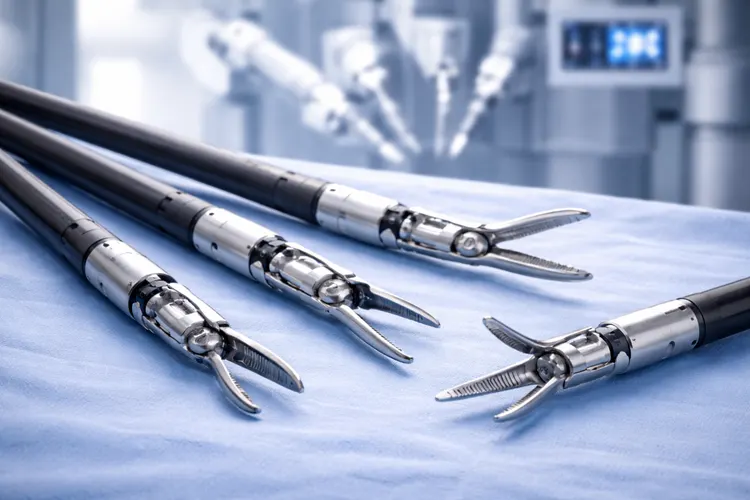
The precision required in minimally invasive procedures like robotic-assisted thoracic surgery (RATS) is significantly enhanced by AI.
Ultra-Precise Segmentation: For procedures like segmentectomy, accurately delineating the tumor, nearby blood vessels, and bronchial structures is critical. AI algorithms automatically perform lung tumor segmentation with unparalleled precision, creating detailed 3D models for surgical simulation. This detailed planning minimizes the risk of positive margins while preserving as much healthy lung tissue as possible.
Intraoperative Real-Time Support: During surgery, AI-powered computer vision and augmented reality (AR) systems can overlay the pre-operative 3D plan onto the live surgical view. This AI-powered guidance helps the surgeon navigate complex anatomy, especially when tumor boundaries are unclear, enhancing surgical accuracy and efficiency in RATS.
3. Postoperative Risk Prediction and Outcome Optimization
Predictive analytics allow thoracic surgeons to anticipate which patients are most likely to develop complications, enabling proactive intervention.
Cardiopulmonary Complication Forecasting: Machine learning models are trained on thousands of patient characteristics (demographics, comorbidities, lab results) to predict the risk of major postoperative events, such as pulmonary or cardiac complications. Studies have shown that a Machine Learning model can accurately predict cardiopulmonary complications after lung resection, supporting better informed consent and perioperative optimization.
Predicting Length of Stay: AI can forecast the expected length of hospital stay and the likelihood of readmission, optimizing resource allocation and discharge planning.
The AtlasGPT Advantage in Thoracic Surgery
AtlasGPT provides a comprehensive AI toolset specifically tailored for the thoracic environment, moving beyond simple image reading to provide actionable clinical intelligence.
Feature | Thoracic Surgery Benefit |
Lung Nodule Risk Score | Provides an instant, personalized malignancy risk score for detected nodules, guiding follow-up and biopsy decisions. |
Automated 3D Planning | Generates high-fidelity 3D models of lung segments, vessels, and tumors from CT scans, minimizing manual segmentation time from hours to minutes. |
Complication Risk Modeling | Predicts the probability of postoperative pulmonary complications (PPCs) or prolonged ventilation for individual patients before the procedure. |
Robotic Augmentation | Integrates with robotic platforms to provide real-time visual overlays and trajectory guidance, improving precision in lymphadenectomy and tumor resection. |
Leading the Future of Chest Care
The integration of AI in Thoracic Surgery is not just about adopting new technology; it’s about establishing a new standard of care—one that is faster, more precise, and fundamentally patient-centric.
To learn how to integrate this next-generation intelligence into your practice, contact Atlas Meditech today.
Click here to Request an AtlasGPT Demo for Thoracic Surgery.