Sports Medicine is the specialized field dedicated to preventing, diagnosing, and treating injuries related to physical activity. However, even at elite levels, practitioners face immense challenges: predicting when an athlete is about to break down, accurately diagnosing subtle injuries like concussions, and creating truly personalized rehabilitation plans that minimize re-injury risk.
Artificial Intelligence (AI) in Sports Medicine is rapidly transforming this landscape, shifting the focus from reactive treatment to proactive, precision-based athlete care. Atlas Meditech’s AtlasGPT, which integrates AI across 35 medical specialties, is deploying advanced machine learning tools to help sports medicine teams, physical therapists, and trainers keep athletes healthier and performing at their peak.
Key Challenges in Sports Medicine
Predicting Non-Contact Injuries:
High-level injuries (e.g., ACL tears, hamstring strains) often occur with little warning. Clinicians rely on subjective markers or basic analytics, often missing complex, non-linear risk factors.
Objective Diagnosis of Concussion:
Traditional concussion diagnosis is often reliant on subjective symptom reporting and cognitive testing, leading to challenges in consistently making safe return-to-play decisions.
Standardized Rehabilitation:
One-size-fits-all rehab protocols lead to variable recovery times and a high rate of re-injury. Customization is essential but incredibly data-intensive.
AI-Driven Solutions Revolutionizing Athlete Care
1. Predictive Injury Prevention
AI algorithms can ingest and analyze massive, complex datasets—including data from wearable sensors, biomechanical assessments, training load, and sleep patterns—to identify subtle, individualized risk patterns that precede injury.
Machine Learning (ML) models, such as Random Forests and XGBoost, are proving highly effective at spotting these anomalies. This proactive approach allows medical staff to implement immediate, tailored preventative measures—such as adjusting training load or prescribing a specific corrective exercise—before an athlete sustains an injury.
AI models improve the accuracy and reliability of injury risk assessments by tailoring prevention strategies to individual athlete profiles and processing real-time data, as highlighted in the Diagnostic Applications of AI in Sports: A Comprehensive Review of Injury Risk Prediction Methods.
2. Enhanced Diagnostic Accuracy and Imaging
AI is becoming an indispensable tool for interpreting medical imaging, especially in time-sensitive and subtle cases.
Musculoskeletal Imaging: Convolutional Neural Networks (CNNs) can quickly analyze MRI, X-ray, and ultrasound scans, accelerating the detection and classification of fractures, ligament tears, and muscle anomalies with a high degree of speed and accuracy.
Concussion Management: For head trauma, AI can process complex neuroimaging data to identify microstructural changes in the brain resulting from repeated head impacts that traditional imaging methods might miss. Crucially, an AI program processing MRI results can accurately identify changes in brain structure from repeated head injury, suggesting a new diagnostic tool for subtle, "invisible" brain damage in athletes, according to New Tool May Help Spot 'Invisible' Brain Damage in College Athletes. Furthermore, AI-powered tools analyze objective biomarkers, like eye-tracking patterns and balance metrics, to assist in providing a more reliable and objective diagnosis, aiding safer return-to-play decisions.
3. Precision Rehabilitation and Recovery
Standard rehabilitation often involves a fixed timeline. AI in Sports Medicine moves beyond this by creating dynamic, personalized rehabilitation protocols based on real-time feedback.
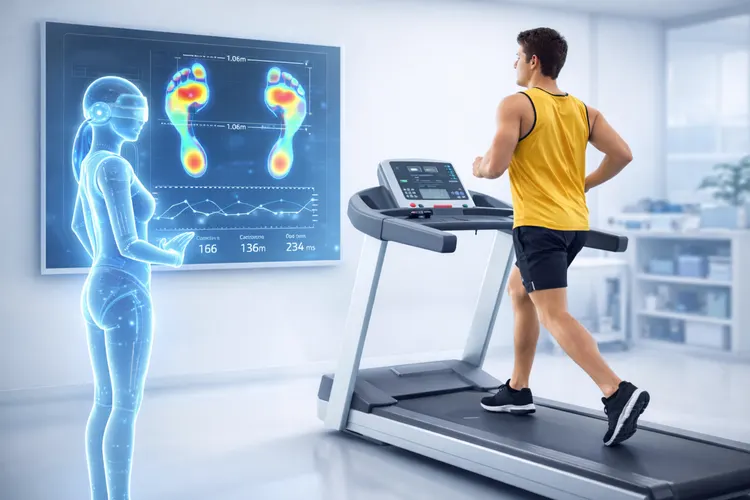
Using motion-capture and wearable devices, AI systems monitor an athlete’s form, strength, and range of motion during exercises. If an athlete plateaus or is performing an exercise incorrectly, the AI adapts the protocol instantly. One of AI's key strengths in personalized rehabilitation is its capacity to process vast datasets and monitor real-time information, thereby elevating the level of personalization and supporting ongoing patient management. This approach, detailed in Artificial intelligence in personalized rehabilitation: current applications and a SWOT analysis, ensures maximum efficacy, optimizes recovery speed, and significantly reduces the chance of re-injury upon returning to sport.
AtlasGPT in Sports Medicine: The Proactive Difference
AtlasGPT brings AI’s full power directly to the training room and clinic, helping specialists transition from a reactive model to a proactive, evidence-based system for athlete care.
Feature | Sports Medicine Benefit |
Real-Time Risk Scoring | Analyzes training load, recovery, and biometric data to generate an objective, athlete-specific injury risk score, flagging athletes for immediate intervention. |
Custom Rehab Guidance | Provides individualized rehabilitation programs, constantly adapting exercise intensity, volume, and progression based on objective recovery metrics. |
Image Interpretation Support | Supports clinicians by rapidly analyzing medical images (MRI, X-ray) to identify and classify injuries, accelerating the path to treatment. |
Seamless Data Integration | Integrates data from wearables, Electronic Health Records (EHRs), and diagnostic equipment to create a comprehensive, holistic view of the athlete’s health profile. |
FAQs About AI in Sports Medicine
Question | Answer |
Can AI predict injuries like an ACL tear? | AI can identify high-risk patterns in movement, load, and fatigue that precede non-contact injuries, allowing for preventative intervention. |
Does AI replace the Sports Medicine Physician? | No—AI enhances the physician’s ability to predict risk and diagnose injuries, allowing specialists to focus on tailored treatment plans and clinical decision-making. |
What kind of data does AI use? | Biomechanics (gait, jump force), physiological metrics (heart rate, sleep), training load (volume, intensity), and injury history. |
Elevate Your Sports Medicine Practice with AtlasGPT
Elevate your sports medicine practice and unlock new levels of athlete performance and longevity with AI.