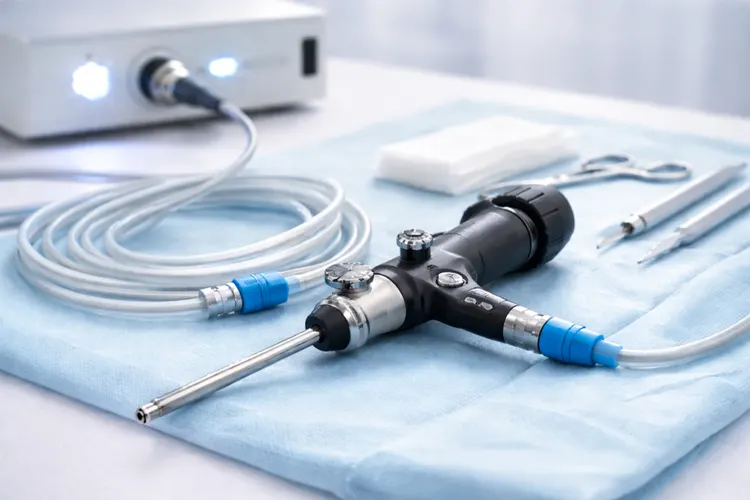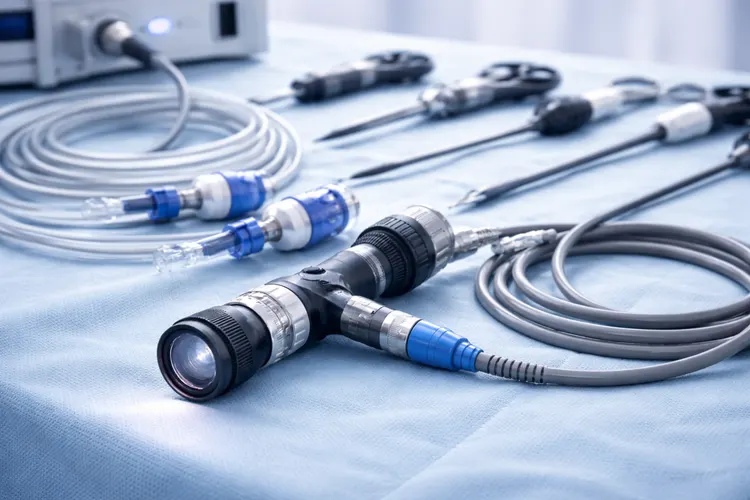
General Surgery is the foundation of modern surgical practice, encompassing complex procedures for the abdominal organs, skin, breast, and endocrine system. Surgeons constantly strive for higher precision, fewer complications, and faster patient recovery. Achieving these goals requires synthesizing vast amounts of patient data, imaging, and intraoperative information—a task perfectly suited for Artificial Intelligence (AI).
AI for Surgical Decision Support is no longer a futuristic concept; it is a clinical reality that acts as an intelligent co-pilot, augmenting the surgeon's skill before, during, and after the procedure. By leveraging machine learning, computer vision, and predictive analytics, AI is setting new standards for efficiency and patient outcomes.
Atlas Meditech’s AtlasGPT integrates these capabilities directly into the surgical workflow, offering general surgeons the precision tools needed for the most critical cases.
The Transformative Pillars of AI in the Operating Room
AI's impact on General Surgery can be categorized into three fundamental areas: precision, safety, and education, all driven by superior surgical decision support.
1. Surgical Robotics and Enhanced Precision
The most visible role of AI is in powering advanced robotic surgery. AI algorithms process real-time imaging and instrument kinematics to provide enhanced stability and dexterity, reducing technical errors.
Real-Time Guidance: During laparoscopic procedures, AI for surgical decision support analyzes the live video feed to automatically highlight critical anatomical structures (like blood vessels or the common bile duct), acting as a constant safety monitor.
Performance Metrics: AI-enabled robots can perform tasks with a level of control that eliminates human tremor. Recent studies on AI-enhanced robotic surgery confirm its benefits, showing a 25% reduction in operative time and a 30% decrease in intraoperative complications, underscoring the rise of robotics and AI-assisted surgery in modern healthcare.
2. Predictive Analytics for Patient Safety
Post-operative complications are a major concern in general surgery, contributing to prolonged hospital stays and increased costs. AI excels at risk stratification and early detection through predictive decision support.
Personalized Risk Assessment: Before surgery, machine learning models analyze patient data, including demographics, comorbidities, and lab results, to provide an individualized risk score for complications like surgical site infections (SSIs) or prolonged length of stay (PLOS).
Unstructured Data Analysis: Machine learning, particularly through large language models (LLMs), is now analyzing unstructured data from clinical notes to proactively identify risks, enabling a new capability where an AI model predicts postoperative complications with high accuracy. This allows clinicians to intervene sooner and tailor post-operative care plans.
3. Revolutionizing Surgical Training
AI is transforming how the next generation of general surgeons is trained, moving away from subjective observation toward objective, quantified feedback.
Real-Time Feedback: AI systems watch video feeds of surgical simulations and procedures, analyzing instrument handling, efficiency of motion, and adherence to surgical steps. This revolutionary approach is creating the next generation of surgeons, as showcased by systems where the future of surgery is learning from machines, which provide real-time, objective coaching on foundational skills like suturing.
Automated Curriculum: AI can create personalized training paths for residents by identifying their weakest skill areas and automatically generating tailored simulation scenarios to focus practice where it is needed most.
The AtlasGPT Advantage in General Surgery
The integration of these AI capabilities into a singular platform transforms the surgical practice. AtlasGPT serves as the central hub for surgical intelligence and decision support.
Feature | General Surgery Benefit |
Pre-Operative Planner | Creates detailed 3D patient anatomy models from imaging, allowing surgeons to virtually practice complex resections, reducing surprises in the OR. |
Intra-Operative Assistance | Provides real-time visual overlays and warnings during robotic and laparoscopic surgery, minimizing the risk of accidental injury to critical structures. |
Complication Sentinel | Continuously monitors patient vitals and clinical documentation post-surgery, alerting staff to the earliest signs of sepsis or other complications. |
Surgical Efficiency Optimizer | Analyzes millions of past operations to estimate surgery duration more accurately, improving operating room scheduling and resource allocation. |
The future of General Surgery is one defined by enhanced human expertise working in collaboration with intelligent systems. In fact, leading organizations like the American College of Surgeons suggest that AI is poised to “revolutionize” surgery by bringing integrated decision support to the operating table.
Elevate Your Surgical Practice with AtlasGPT
By improving accuracy, enhancing safety, and optimizing training, AI for Surgical Decision Support is fundamentally changing what is possible in General Surgery. With Atla GPT, your practice gains a competitive advantage through intelligence and precision.