Dermatology encompasses a wide range of conditions, from common skin disorders to complex cancers like melanoma. Clinicians face challenges in early detection, accurate diagnosis, and personalized treatment due to the variability of skin presentations and the high volume of patient data.
Dermatology AI is revolutionizing skin care by improving diagnostic accuracy, guiding treatment decisions, and streamlining clinical workflows. Leveraging machine learning, image recognition, and predictive analytics, AI supports dermatologists in delivering more precise and timely care.
Atlas Meditech’s AtlasGPT integrates AI across 35 medical specialties, including dermatology, providing real-time clinical decision support for both routine and complex cases.
Challenges in Dermatology Care
1. Early Detection of Skin Conditions
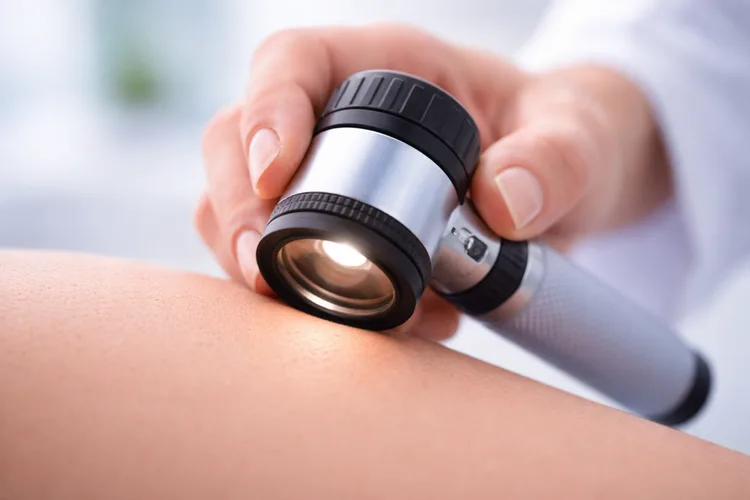
Skin cancers, such as melanoma, often develop subtly, making early detection difficult. AI models analyze dermoscopic images, photographs, and patient history to detect early lesions that may be missed by human eyes.
2. Diagnostic Complexity
Many dermatologic conditions present similarly, complicating diagnosis. AI assists in differentiating between benign moles, malignant lesions, inflammatory conditions, and infectious skin diseases.
3. High Data Volume
Dermatologists must review large numbers of images, biopsy results, and patient histories. AI synthesizes this data efficiently, enabling faster, more accurate clinical decisions.
4. Personalized Treatment Planning
AI helps tailor treatments based on patient-specific factors, including genetics, skin type, comorbidities, and prior therapy response, ensuring optimal outcomes.
How AI is Transforming Dermatology
1. AI-Assisted Skin Imaging
AI analyzes high-resolution dermoscopic and clinical images to detect skin cancers and other dermatologic conditions.
2. Predictive Analytics
AI predicts:
Risk of skin cancer recurrence
Disease progression in chronic conditions like psoriasis or eczema
Likelihood of adverse reactions to treatments
Predictive insights allow clinicians to intervene proactively, improving patient safety and outcomes.
3. Personalized Therapy Recommendations
AI integrates clinical, imaging, and genomic data to guide therapy selection, including:
Targeted biologic treatments for psoriasis or eczema
Optimized phototherapy protocols
Risk-based recommendations for surgical excision of lesions
Clinical trial eligibility for dermatology research
This precision approach ensures therapies are tailored to each patient’s unique needs.
4. Workflow Optimization
AI automates routine tasks:
Summarizing patient histories and prior treatments
Flagging high-risk lesions for follow-up
Analyzing biopsy and lab results
Enhancing documentation for quality reporting
By reducing administrative burden, dermatologists can focus on patient care and decision-making.
Clinical Use Cases in Dermatology
• Early Detection of Skin Cancer
AI-assisted dermoscopy detects melanoma, basal cell carcinoma, and squamous cell carcinoma earlier, improving survival rates.
• Chronic Skin Disease Management
AI predicts flare-ups in conditions such as psoriasis, atopic dermatitis, and acne, allowing proactive intervention (ScienceDirect).
• Treatment Personalization
AI integrates patient history, imaging, and genetic factors to recommend biologics, topical treatments, or surgical interventions tailored to individual needs.
• Teledermatology Support
AI assists remote consultations by triaging cases, analyzing patient-submitted images, and flagging urgent conditions for in-person evaluation (NIH Study).
• Clinical Trial Matching
AI identifies eligible patients for dermatology clinical trials, enhancing access to innovative treatments and research participation.
Atlas Meditech’s Role in Dermatology
Atlas Meditech’s AtlasGPT enhances dermatology practice by:
Providing AI-assisted diagnostics for dermoscopy, imaging, and pathology
Offering predictive models for disease progression and recurrence risk
Recommending personalized treatment plans integrating clinical, imaging, and genomic data
Automating workflow, documentation, and follow-up management
Seamless integration with EHR systems for real-time decision support
Discover how AtlasGPT can improve dermatology care and patient outcomes.
FAQs About Dermatology AI Tools
What is dermatology AI?
AI designed to support detection, monitoring, and treatment of skin conditions.
Can AI detect skin cancer early?
Yes — AI improves identification of melanoma and other malignancies using dermoscopy and imaging.
Does AI help manage chronic skin diseases?
Absolutely — AI predicts flares, monitors therapy response, and guides proactive care.
Is AtlasGPT compatible with dermatology workflows?
Yes — it integrates with imaging systems, dermoscopy tools, pathology, and EHRs.
Does AI replace dermatologists?
No — AI augments decision-making, but final clinical decisions remain with specialists.
Conclusion
AI is transforming dermatology by improving early detection, guiding precision treatment, and optimizing clinical workflows. With AtlasGPT, clinicians can make smarter, evidence-based decisions while providing personalized care for every patient.
Test AtlasGPT in Dermatology to experience AI-driven dermatology care in action.